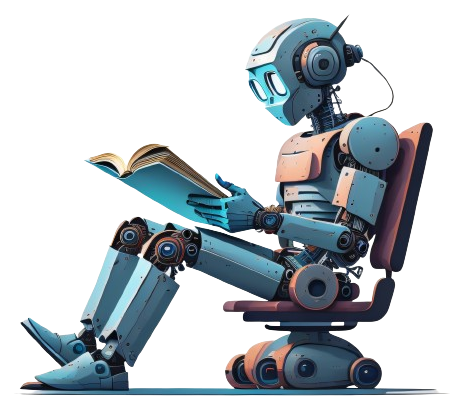
GPT4YOUTH will improve the performance of youth workers in the use of Artificial Intelligence (AI). To this end, an adapted GPT chat will be developed, which will be built and trained to meet the specific needs of this group. Additionally, a PLE (personal learning environment) will be developed to keep up to date with AI developments applicable to their performance and to build a personal learning network.
Implementation
And two applied WPs:
– Development of pilots for implementation and target group feedback.
– Dissemination and results promotion events throughout development
Two technical WPs will be developed:
– PLE – based on a webmix environment that will enable the generation of learning pathways to use AI safely in non-formal youth training.
– A controlled GTP Chat based on a large language model (LLM) adapted to young people. Controlling biases and ethical uses
Results
We will explore and provide new forms of training and support for youth workers to increase their digital competence, specifically in the use of safe and ethical AI. Propose two resources for this, such as the specific adaptation of a GPT Chat and a PLE that allows you to stay updated with respect to the advances of this disruptive technology that is changing practically all sectors. These results will be accessible, updatable and sustainable.
LAST NEWS
Transnational Meeting no. 1 – Agenda 29th January 2025
Funded by the European Union. Views and opinions expressed are however those of the author(s) only and do not necessarily reflect those of the European Union or the European Education and Culture Executive Agency (EACEA). Neither the European Union nor EACEA can be held responsible for them.